Science ~ Unreal Mad

Quote

Chase the fire in your soul, not the comfort of the crowd.

Showing posts with label Science. Show all posts

Sunday, April 26, 2015

Science behind the CRY

1. No crying matter
Do you know that there are 3 different types of tears? Our tears have different compositions. They’re based on whether something’s irritating your eye, emotional or simply to keep our eyes moisturized.

no crying matter

2. Bless you!
Do you know that it impossible to sneeze with our eyes open? Clamping our eyes shut is an involuntary reflex. It’s simply an uncontrolled body response.


Bless you
It was once believed that we shut our eyes while sneezing to prevent our eyes from popping out. Just an urban legend, of course!

3. Two shades
Do you know some people are born with two differently coloured eyes? This condition is called heterochromia.

coloured eyeglasses
Hollywood celebs such as Christopher Walken and Demi Moore have this condition.

4. Super vision
Do you know that about 2% women have a rare genetic mutation that enables them to see 100 million colors? A condition called tetrachromacy.

Super vision

5. High-resolution eyes
Do you know that if the human eye was a digital camera, it would have 576 megapixels? Talk about high quality images.

High-resolution eyes

6. Twitchy eyes
Do you feel your eyes constantly making tiny jerking movements? This is called blepharospasm, which is an involuntary movement of the eyelid every few seconds.

Twitchy eyes
For the superstitious lot, a mere twitch in your eye can bring with it a throng of superstitious thoughts. For instance, ladies, if you are from China or India, a twitching left eye signifies good luck.

Interesting facts about Fireworks

    chinese fireworks
  1. The earliest documentation of fireworks dates back to 7th century China. They were invented more than 2000 years ago in China.
  2. China is the largest manufacturer and exporter of fireworks in the world. 90% of all fireworks originate from here.
  3. In 1240 the Arabs acquired knowledge of gunpowder. A Syrian named Hasan al-Rammah wrote of fireworks using terms that suggested he derived his knowledge from Chinese sources.
  4. The first recorded fireworks in England were at the wedding of King Henry VII in 1486.
  5. Dreaming about fireworks means that you like to be the centre of attention and are showing off to others. It also symbolizes enthusiasm and exhilaration.
  6. fireworks scare off evil spirits
  7. The fireworks were used to accompany many festivities, scare off evil spirits and promote prosperity.
  8. The largest chocolate firework was measuring 3m high and 1.5m in diameter and containing 60kg of Swiss Cailler chocolates. The firework was released in Zurich on New Year's Eve 2002.
  9. Fireworks are not fun for animals. Always keep dogs and cats inside the house when fireworks are being let off. Stay calm and make sure they have somewhere to hide.
  10. The biggest occasion for fireworks in the UK is Guy Fawkes Night (5th November). It is a celebration of the failing of the Gunpowder Plot on 5 November 1605, an attempt to kill King James I at the Houses of Parliament.
  11. The largest firework rocket is 13kg and was produced and launched in Portugal in 2010.
  12. Queen Elizabeth was so fascinated with fireworks that she created an honorary title, "Fire Master of England" for the individual who created the best fireworks.
  13. The word for firework in Japanese, 'hanabi', which actually means "fire-flower".
  14. Amédée-François Frézier published a "Treatise on Fireworks" in 1706, covering the recreational and ceremonial uses of fireworks. The book became a standard text for fireworks makers.
  15. shells and rockets
  16. A rocket can reach speeds of 150mph, however the shell can reach as high as 200 metres.
  17. A sparkler burns at a temperature over 15 times the boiling point of water. Three sparklers burning together generate the same heat as a blowtorch. When your sparkler goes out, put it in a bucket of water.
  18. France uses fireworks to celebrate Bastille Day and celebrate storming the prison of Bastille.
  19. The record for the largest firework display consisted of 66,326 fireworks and was achieved in Portugal in 2006.
  20. Static electricity in synthetic clothing can set off firecrackers. People making firecrackers wear only cotton clothing while making firecrackers.
  21. Italy was the first country to truly master and experiment with fireworks in Europe. They were the first to use shells for firecrackers to be loaded into canons and shot into the air.
  22. Half of all firework injuries are to children under the age of 16.
  23. sparkler heart
  24. The biggest annual fireworks display event in Europe is the International Festival concert held in Edinburgh, Scotland, in which a million fireworks are set off in less than an hour.
  25. At first fireworks were only orange and white. In the Middle Ages new colours were achieved by adding different salts. The hardest colour to create is blue.
  26. Sparklers can be used to make funny pictures. All you need is a totally dark setting, a sparkler to draw with and a camera recording a long exposure.
  27. A record breaking 56,000 firework rockets were launched simultaneously in a spectacular opening to the Plymouth, UK Fireworks Championships by Scientist Roy Lowry.
  28. A string of firecrackers that went on and on lasting 22 hours marked the New Years day celebrations in Hong Kong in the year 1996.


Thursday, April 24, 2014

Foods That Look Like Body Parts

There’s no question that maintaining a nutritious diet can help keep your body healthy. But when it comes to which foods can specifically benefit which body parts, science remains surprisingly sketchy. But nature gives us a big clue as to what foods help what part of our body!


Here are 10 foods that mirror the body parts they provide nutrients for—for example, brain-boosting walnuts actually look like a brain. Coincidence? Maybe. Though these healthy foods are beneficial to the whole body, the list below is a fun reminder of what to eat to target specific areas. Remember, these are best & more powerful when eaten raw.


A sliced Carrot looks like the human eye. According to science, eating carrots greatly enhances blood flow to the eyes. Carrot gets their orange color from a plant chemical called beta-carotene, which reduces the risk of developing cataracts. The chemical also protects against macular degeneration an age-related sight problem that affects one in four individuals over the age of 65. If one tries to pop a pill of beta-carotene it doesn’t have the same effect, says scientists at John Hopkins Hospital in Baltimore, USA.


A Tomato has four chambers and is red in color, so also the heart is red and has four chambers. Research has confirmed that tomatoes are loaded with lycopine and it is indeed pure heart and blood food.


Grapes resembles the alveoli of the lungs. The lungs are made of branches of ever-smaller airways that finish up with tiny branches of tissue called alveoli. These structures allow oxygen to pass from the lungs to the blood stream. A diet high in fresh grapes has shown to reduce the risk of lung cancer and emphysema. Grape seeds also contain a chemical called proanthocyanidin, which is thought to reduce the severity of asthma triggered by allergy. One reason that premature babies struggle to survive is that, these alveoli do not begin to form until 23 to 24 week of pregnancy.


A Walnut looks like a little brain, a left and right hemisphere, upper cerebrums and lower cerebellums. Even the wrinkles or folds on the nut are similar to those of the neo-cortex. Scientists claim that walnuts help in developing over three dozen neuron-transmitters within the brain enhancing the signaling and encouraging new messaging link between the brain cells. Walnuts help warding off dementia. They also extract and break down the protein based plaques associated with Alzheimer’s diseases, according to a study by Dr. James Joseph of Tuft University in Boston.


Kidney Beans actually heal and help maintain kidney function and are shaped exactly like the human kidneys (hence their name). Kidney beans provide a variety of minerals and vitamins, and so are generally beneficial for your health. If your kidneys are healthy, kidney beans can — when consumed as part of a balanced diet — contribute to your kidney health. If your kidneys are diseased, you might need to moderate your intake of kidney beans.


Celery, Rhubarb, Bok-choy and more look just like bones structure. These foods specifically target bone strength. Bones are made up of 23% sodium and these foods have sodium in them. If you don’t have enough sodium in your diet the body pulls it from the bones, making them weak. These foods replenish the skeletal needs of the body.


Avocados and Pears are good for the health and functioning of the womb and cervix of the female and look just like these organs. Modern research shows that when a woman eats one avocado a week, it balances the birth hormones, sheds unwanted birth weight and can even prevent cervical cancer. It even takes exactly nine months to grow an avocado from blossom to ripened fruit, just like a human baby! There are said to be over 14,000 photolytic chemical constituents of nutrition in each one of these foods.


Figs are full of seeds and hang in twos when they grow. Studies have shown that Figs increase the mobility of male sperm and increase the sperm count as well as overcoming male sterility.


Sweet Potatoes resemble the pancreas and can actually balance the glycemic index of diabetics. The oblong sweet potato bears a strong resemblance to the pancreas, and also promotes healthy function in the organ. “Sweet potatoes are high in beta-carotene, which is a potent antioxidant that protects all tissues of the body, including the pancreas, from damage associated with cancer or aging,” says Somer.


Olives assist the health and function of the ovaries. An Italian study found that women whose diets included a lot of olive oil had a 30% lower risk of ovarian cancer. The reasons are unclear, but the healthy fats in the oil may help suppress genes predisposed to causing cancer.


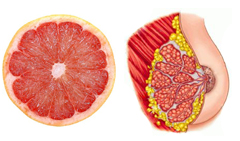
Grapefruits, Oranges, and other citrus fruits look just like the mammary glands of the female and actually assist the health of the breasts and the movement of lymph in and out of the breasts. The similarity between round citrus fruits––like lemons and grapefruit––and breasts may be more than coincidental. “Grapefruit contains substances called limonoids, which have been shown to inhibit the development of cancer in lab animals and in human breast cells,” says Dr. Moulavi.


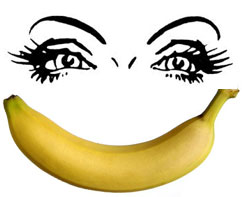
Eating a Banana will cheer you up and put a smile on your face. This popular fruit contains a protein called tryptophan, when digested it gets converted into a neurotransmitter called serotonin, which is a mood regulating chemical in the brain. Banana can be termed as an antidepressant drug, since it adjusts the level of serotonin production in the brain.


Onions look like the body’s cells. Research shows onions clear waste materials from all of the body cells. They even produce tears which wash the epithelial layers of the eyes. 


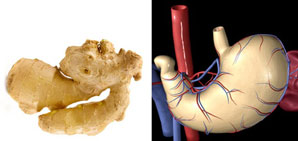
Ginger looks like the stomach and it also aids in digestion. Indians and Chinese have been using it for over 5000 years to calm stomach and cure nausea, and motion sickness. It also slows down the growth rate of bowel tumors.


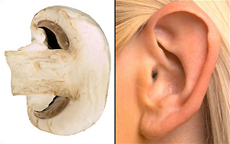
A Mushrooms when sliced in half resembles the shape of the human ear. Mushrooms improve hearing abilities, since they contain Vitamin D, which is healthy for bones, especially the 3 tiny bones in the ear that transmit sound to the brain.


Broccoli – the close-up of tiny green tips on a broccoli head looks like 100 of cancer cells. A team of researchers at US National Cancer Institute found if a weekly serving of broccoli was enough to reduce the risk of prostate cancer by 45%.


Ginseng root looks like a human body, and it is a holistic cure for nearly all ailments. 

Honorable Mention


Red wine, which is rich in antioxidants and polyphenols, including powerful resveratrol, looks like blood. “When you drink it, you’re really loading up on the healthy stuff that protects against destructive things in the blood, like LDL cholesterol, which can cause heart disease,” says Somer. “There’s also a blood-thinning compound in red wine, so it reduces blood clots, which are associated with stroke and heart disease.”

Monday, April 21, 2014

The Science of Sleep

Sleep science We spend a third of our lives doing it.
Napoleon, Florence Nightingale and Margaret Thatcher got by on four hours a night.
Thomas Edison claimed it was waste of time.

Why do we sleep?
So why do we sleep? This is a question that has baffled scientists for centuries and the answer is, no one is really sure. Some believe that sleep gives the body a chance to recuperate from the day's activities but in reality, the amount of energy saved by sleeping for even eight hours is miniscule - about 50 kCal, the same amount of energy in a piece of toast.
We have to sleep because it is essential to maintaining normal levels of cognitive skills such as speech, memory, innovative and flexible thinking. In other words, sleep plays a significant role in brain development.


What would happen if we didn't sleep?
Irritable man A good way to understand the role of sleep is to look at what would happen if we didn't sleep. Lack of sleep has serious effects on our brain's ability to function. If you've ever pulled an all-nighter, you'll be familiar with the following after-effects: grumpiness, grogginess, irritability and forgetfulness. After just one night without sleep, concentration becomes more difficult and attention span shortens considerably.
With continued lack of sufficient sleep, the part of the brain that controls language, memory, planning and sense of time is severely affected, practically shutting down. In fact, 17 hours of sustained wakefulness leads to a decrease in performance equivalent to a blood alcohol level of 0.05% (two glasses of wine). This is the legal drink driving limit in the UK.
Research also shows that sleep-deprived individuals often have difficulty in responding to rapidly changing situations and making rational judgements. In real life situations, the consequences are grave and lack of sleep is said to have been be a contributory factor to a number of international disasters such as Exxon Valdez, Chernobyl, Three Mile Island and the Challenger shuttle explosion.
Sleep deprivation not only has a major impact on cognitive functioning but also on emotional and physical health. Disorders such as sleep apnoea which result in excessive daytime sleepiness have been linked to stress and high blood pressure. Research has also suggested that sleep loss may increase the risk of obesity because chemicals and hormones that play a key role in controlling appetite and weight gain are released during sleep.

What happens when we sleep?


REM What happens every time we get a bit of shut eye? Sleep occurs in a recurring cycle of 90 to 110 minutes and is divided into two categories: non-REM (which is further split into four stages) and REM sleep.

Non-REM sleep
Stage one: Light Sleep
During the first stage of sleep, we're half awake and half asleep. Our muscle activity slows down and slight twitching may occur. This is a period of light sleep, meaning we can be awakened easily at this stage.
Stage two: True Sleep
Within ten minutes of light sleep, we enter stage two, which lasts around 20 minutes. The breathing pattern and heart rate start to slow down. This period accounts for the largest part of human sleep.
Stages three and four: Deep Sleep
During stage three, the brain begins to produce delta waves, a type of wave that is large (high amplitude) and slow (low frequency). Breathing and heart rate are at their lowest levels.
Stage four is characterised by rhythmic breathing and limited muscle activity. If we are awakened during deep sleep we do not adjust immediately and often feel groggy and disoriented for several minutes after waking up. Some children experience bed-wetting, night terrors, or sleepwalking during this stage.


Closed eye
REM sleep
The first rapid eye movement (REM) period usually begins about 70 to 90 minutes after we fall asleep. We have around three to five REM episodes a night.
Although we are not conscious, the brain is very active - often more so than when we are awake. This is the period when most dreams occur. Our eyes dart around (hence the name), our breathing rate and blood pressure rise. However, our bodies are effectively paralysed, said to be nature's way of preventing us from acting out our dreams.
After REM sleep, the whole cycle begins again.

How much sleep is required?
There is no set amount of time that everyone needs to sleep, since it varies from person to person. Results from the sleep profiler indicate that people like to sleep anywhere between 5 and 11 hours, with the average being 7.75 hours.
Jim Horne from Loughborough University's Sleep Research Centre has a simple answer though: "The amount of sleep we require is what we need not to be sleepy in the daytime."
Even animals require varied amounts of sleep:

Species Average total sleep time per day
Python 18 hrs
Tiger 15.8 hrs
Cat 12.1 hrs
Chimpanzee 9.7 hrs
Sheep 3.8 hrs
African elephant 3.3 hrs
Giraffe 1.9 hr
The current world record for the longest period without sleep is 11 days, set by Randy Gardner in 1965. Four days into the research, he began hallucinating. This was followed by a delusion where he thought he was a famous footballer. Surprisingly, Randy was actually functioning quite well at the end of his research and he could still beat the scientist at pinball.

Wednesday, September 7, 2011

Top 10 Most Treacherous Stories Ever

A look back on the conspiracy theories that shocked, amazed and appalled us over the past.


1. Apollo Moon Landing

The Apollo 11 Moon landing in 1969 is said to be an elaborate hoax by the US according to some space conspiracy theorists. In 1969, millions of people watched as men walked on the moon for the first time in human history. Or did they? According to one remarkably enduring conspiracy theory, the U.S. government faked the moon landings with the use of movie sets and props. NASA footage of Moon’s surface seems bogus according to some theorists, who claim glaring anomalies such as shadows going in different directions and the US flag blowing in the wind show it was faked.

2. Nine-eleven

The defining moment of the past decade has spawned the most controversial and hotly debated conspiracy theory of all time. Did the US government allow the 9/11 attacks on the Twin Towers and the Pentagon to happen despite it’s prior knowledge, or did the Bush administration plan and execute the attacks as a “false flag” operation to justify the wars in Afghanistan and Iraq and the repressive anti-terror legislation that offers the US government unprecedented control over the public. A bitter argument between theorists and scientific journals still rages over whether the two planes that struck the twin towers were the cause of the World Trade Centre’s collapse, or whether controlled explosions and thermite plasma were used to destroy the skyscrapers. The destruction of Tower 7, which was not hit by a plane, and questions over whether the Pentagon was struck by a cruise missile rather than a jumbo jet, have all lent weight to the conspiracists claims.

3.The 2004 Indian Ocean Tsunami
A theory which has gained considerable traction in the Muslim world following one of the worst natural disasters in South Asian history is that the tsunami could have been caused by an Indian nuclear experiment aided by Israeli and American experts. Theorists suggest that the heated nuclear race between India and neighbour Pakistan, led to the former spending billions on unsophisticated nuclear technology. Theorists are then split as to whether the test went awry, or whether backed by the US and Israel, India was taking the first step in “geological warfare” as part of a bid to wipe out Muslims in the heavily Islamic areas of Indonesia and Sri Lanka which suffered most of the 230,000 deaths caused by the Tsunami.
 
4.The Roswell cover up and Area-51
In 1947, a mysterious crash that the U.S. military says was a surveillance balloon sparked the most enduring alien conspiracy of all — that it was in fact an alien spacecraft that was wrecked in Roswell, N.M., and that the government has kept the alien corpses, their technology, and the certain knowledge of life on other planets among its most highly guarded secrets. Many believe that the US military covered up the crash of an alien spacecraft in Roswell, New Mexico. It has been claimed that various parts of an alien spacecraft and even bodies of extra-terrestrials were retrieved from the scene. The high-security military base in Nevada known variously as Dreamland, Groom Lake, and Area 51, is believed by conspiracy theorists to hold more secrets than the spy planes tested there. It’s conjectured that Area 51 is where government scientists reverse-engineered alien technology, possibly including the Roswell debris. Their research supposedly gave rise to everything from stealth technology to time travel. It’s also spawned conspiracy-theorist hunting grounds like the nearby Alien Research Center.

5. Princess Diana’s Death

When investigators concluded that the 1997 death of Princess Diana and her boyfriend, Dodi Fayed, was caused by a drunk driver and reckless driving, conspiracy theorists — including Fayed’s powerful father — begged to differ. They said they knew that it was in fact the British royal family who had MI6 kill Di because she was pregnant with a Muslim man’s baby.
6. NASA Is Covering Up an Alien Civilization on Mars
In 1976, the Viking 1 space probe took a photograph of the Cydonia region of Mars that included what appeared to be a huge human face gazing up at the sky (bottom). The images created a furor among those believed that it was proof of an ancient Martian civilization. In 1998, the Mars Global Surveyor (top photos) took better-resolution photos that seemed to prove that the Face on Mars was simply an optical illusion — but some diehard conspiracy theorists insist it’s a NASA cover-up.
7. Big Business Wants Marijuana Outlawed
Conspiracy theorists say that the real reason marijuana is against the law is because the hemp plant is so useful that it threatens the paper, rope, pharmaceutical, and cloth industries.
8. Paul Is Dead
There is an urban legend alleging that Paul McCartney of The Beatles died in 1966 and was replaced by a look-alike and sound-alike. He was supposedly replaced by William Campbell- the winner of a look-alike contest. Conspiracy theorists say that he died decades ago, killed in a car accident. Supposedly, various Beatles songs, played either backward or forward, give hints to the conspiracy. Yet another conspiracy theory states that Paul isn’t dead, but that the Beatles started the rumor themselves as a prank that they’ve been perpetuating ever since.

9.The Bermuda Triangle

The Bermuda Triangle, also known as the Devil’s Triangle, is a region in the western part of the North Atlantic Ocean in which a number of aircraft and surface vessels are alleged to have mysteriously disappeared in a manner that cannot be explained by human error, piracy, equipment failure, or natural disasters. Popular culture has attributed these disappearances to the paranormal, a suspension of the laws of physics, or activity by extraterrestrial beings. A substantial body of documentation reveals, however, that a significant portion of the allegedly mysterious incidents have been inaccurately reported or embellished by later authors, and numerous official agencies have stated that the number and nature of disappearances in the region is similar to that in any other area of ocean.
10. Global Warming
It’s the end of the world as we know it, or maybe not. As the world’s most powerful men ended the decade with a load of hot air in Copenhagen, the rest of us were left wondering just how hot our air is going to get. Having spent most of the noughties being told that the debate is over, conspiracy theorists are becoming increasingly vocal in their opposition to the global warming lobby. With scientists, politicians, and a House of Lords inquiry providing detailed rebuttals of the science behind man-made climate change, the cracks in the case for creating a “green planet” to save ourselves from melting ice caps and burning summers are beginning to appear. A multi-billion dollar industry built on fear and government misinformation provides the ideal backdrop for one of the biggest alleged conspiracies of the naughtiness.

[BELIEVE IT OR NOT] Mind Blowing Engineering Wonder, Sapparo Dome in Japan

Amazing! only Japanese can imagine & execute!! Sapporo (A commercial city in northern Japan on western Hokkaido) stadium Seating capacity of 42,122, what’s unique about this Stadium is that, it’s an indoor stadium with the playing field out side, and when required, the field will move inside the stadium… and not only that, the field once inside it will rotate within its axis to ensure the spectators will get a all round view of the game being played…


The highly advanced and technological stadium ‘Sapparo Dome’ is a multifunctional and innovative framework that is able to easily transform itself from a football (soccer) stadium into a baseball park as seen at the image below.
The system is as simple as it is sophisticated. Raised on a pneumatic system, the playing field is made to rotate and pass through a mechanized 90 meter opening of two moving walls. The field can either be placed in an artificial basin below the stadium or transported outside where the grass can grow naturally. The whole transformation process takes only 5 hours to complete.
The stadium was constructed by a group led by architect Hiroshi Hara. It has the shape of a large ’8′ which is created from the union of the two lengthened circumferences. One of these circumferences constitutes the actual stadium: the arena is characterized by a single ring of continuous tiers which form a circle around the conical surface. Tribunes are automatically moved throughout the field depending on the sport – a rectangular tribune is used for a soccer field, by rotating the tribunes a diamond shape is formed for baseball.
The dome was inaugurated on 02 June 2001 and also serves as a meeting place for local citizens, consequently the stadium is nicknamed ‘Hiroba’ (the public square). Moreover, the stadium offers a great attraction, namely the existence of a 53 meter high cupola from where there is a beautiful view over the city. From the outside, the stadium looks like a futuristic complex thanks to the aerodynamic shape that can open and close depending on climatic conditions.

Wednesday, July 20, 2011

New Generation tyres by MICHELIN


Power of Innovation!! !


Radical new tire design by Michelin. The next generation of tires.


These tires are airless and are scheduled to be out on the market very soon!!!

The bad news for law enforcement is that spike strips will not work on these tires. This is what great R&D will do, and just think of the impact on existing technology:


no more air valves
no more air compressors at Petrol Pumps
no more flat tires in the middle of long drives


These are actual pictures taken in the South Carolina plant of Michelin. It will be awhile before they are available to the automotive industry.


Great power of Innovation.........
back to top